Safeguarding

What is Safeguarding?

Safeguarding and promoting the welfare of children is everyone’s responsibility. Everyone who comes into contact with children and their families has a role to play. 

In order to fulfil this responsibility effectively, all at St Mary’s ensure the approach is child-centred. This means that St Mary’s consider, at all times, what is in the best interests of the child.

St Mary’s recognises that no single practitioner can have a full picture of a child’s needs and circumstances. If children and families are to receive the right help at the right time, everyone who comes into contact with them has a role to play in identifying concerns, sharing information and taking prompt action.

 The purpose of safeguarding children is to:

  • Protect them from abuse, maltreatment and exploitation.
  • Prevent anything from harming their health or development.
  • Ensure they can grow up under safe and effective care.
  • Take action to ensure they have the best outcomes in life.

As part of our Safeguarding offer, St Mary’s and Our Lady of Lourdes Catholic Multi Academy Trust (OLoL CAMT) have a team of people who lead on safeguarding our students, they are our Designated Safeguarding Leads (DSLs). 

St Mary’s DSLs are also the people who will support with any concerns raised around children’s health, wellbeing and safety, as described above. If you have a concern regarding the wellbeing, health, development, relationships or safety of a child, please use the contact details below.
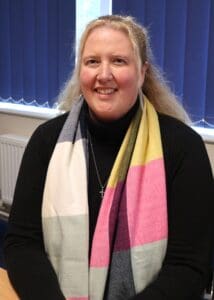
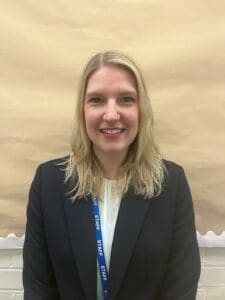
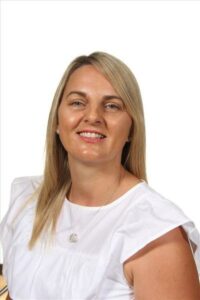
Sara Tyers

E: s.tyers@st-marys-grantham.lincs.sch.uk

Tel: 01476 562017

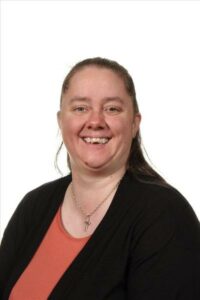
Olivia Mumford

E: o.mumford@st-marys-grantham.lincs.sch.uk

Tel: 01476 562017

Hannah Chapman

Tel: 01476 562017

Cathy Steeples

Tel: 01476 562017

Leaders must create a culture in which all staff, trustees and visitors understand how to raise concerns and feel supported to do so.

Governors should ensure that they have a clear understanding of the local risks that are applicable to the demographic of the school.

Governors should ask challenging questions of leaders’ assertions and ‘triangulate’ these assertions more thoroughly so that they understand what behaviour is like.

So that we are able:

  • To reduce risk and prevent harm to children.
  • To ensure the identification of, and timely and appropriate responses to, risk and harm to children.
  • To ensure that all adults in the school community understand their roles and responsibilities in respect of the above.

Our school provides a universal service to children in our locality. School staff are closely involved, daily, with children and their families. Consequently, we have a critically important role towards the identification and prevention of harm, abuse, neglect or exploitation.


Ensuring a culture of safeguarding is a priority for our school.

We do this by:

Our leaders create a culture of vigilance and continuously communicate the importance of safeguarding throughout our school community.


Having a system where concerns can be reported immediately. ·  Our academies uses CPOMs recording system. This is a secure digital platform that enables staff or other members of your organisation (such as volunteers) to record their safeguarding concerns quickly and easily.

·  All staff know to report concerns to the school’s DSL and seek advice from the trust safeguarding lead.

·  Actions in response to any concerns are timely and effective.

Supporting our children. ·  Pupils understand what is unacceptable and how they can disclose this information to us, even if the disclosure isn’t about them.

·  Pupils feel safe and are confident to seek help if they need to.

Safeguarding Governor ·  Our safeguarding governor, supports all our staff and safeguarding leads.

·  Ensures that we follow the safer recruitment processes

Working with parents and carers ·  Our academies support our parents and make sure that they are not only aware of what safeguarding is, but show them how they can report concerns to us.

·  Our academies ensure that the parents of our pupils know that we are always there to hear their concerns and that their concerns will always be confidential.

Continual Professional Development ·  OLOL CMAT use Flick safeguarding training every September for all staff and governors.

·        Our academies attend the DSL Networks each term at Trust level.

·  Regular practice in staff meetings to ensure that practical examples of safeguarding are discussed to ensure that we keep safeguarding at the forefront of all that we do.

·  All staff understand and recognise risk, as well as potential signs of harm, abuse, neglect or exploitation and other safeguarding concerns.

Curriculum ·  Elements of our curriculum enable pupils to recognise and respond to risks to their wellbeing which are successfully designed and delivered – for example,

–  Learning about online safety or healthy relationships.

–  Clear RSE programme in school.

Environment ·  Our environment is effectively designed to safeguard students – this includes physical aspects of the learning environment as well as more cultural or behavioural elements, such as zero-tolerance of discriminatory language.


Potential Contextual Safeguarding areas of risk[1]

Each School has a separate contextual area of risk and mitigation.


Area of risk Mitigation
Neglect · Staff CPD aimed at the signs and symptoms of possible neglect.

· Each child has there 5 ‘safe people’ who they can go and talk to which includes 2 members of staff as their ‘Trusted adults’.

·  All staff have undergone appropriate and designated Safeguard Training on Flick.

·  Working closely with parents and Early Help worker teams.

·  Signposting local support charities and funding available.

·  NSPCC speak out/Stay safe workshops for all year groups

Missing Episodes ·  Robust attendance policy

·  Work conducted with LCC Attendance Champion – Review meetings

·  Importance of attendance – Parents/Carer Sway

·  Attendance section on half termly sway for parents/Carers (newsletter)

· Training for staff on how to communicate with parents/Carers on their child’s attendance

· Mental Health and Wellbeing policy, referral systems, termly letters, SEND reviews, parent consultation evenings and end of year reports.

Domestic Violence · RSHE teaches the key elements of what makes a healthy relationship.

· Reporting and recording incidents constantly reminded.

· CPOMS training and updates for staff in ensuring that all concerns are correctly logged.

· Staff briefing on the signs and symptoms of DV – including the sharing of LCC DV leaflet.

· Domestic abuse awareness training by LCC for staff.

· NSPCC speak out/Stay safe workshops for all year groups

Substance misuse

(Parents/Carers)

· Staff CPD through safeguarding training and one-minute guides on signs and symptoms.

· Safeguarding/CP CPD– Flick

· Safeguarding/CP CPD for DSLs Home office and Lincolnshire Safeguarding Board

· Reported on CPOMS.

· Parents offered support through Early Help Team.

· LCC substance misuse workshop for Yr6

Mental Health · NSPCC, MHST and Compass Go Work with children – whole classes, workshops, groups and individuals.

· Support for children as needed – daily check-ins, ELSA interventions, Trauma Support Specialist support and Forest school interventions.

E-Safety · Staff CPD on the taught elements of E-safety.

· School E-Safety key messages to be displayed and on electronic student devices.

· E-safety workshops provided by LCC for yrs2-6.

· HT liaises with IT providers to review filtering and monitoring systems and response mechanisms.

· Bespoke assemblies and activities interspersed throughout the year for children on E-Safety.

· E-Safety tips and reminders to be shared with families.

County Lines · Level 2 and Level 3 Safeguarding

· Year 6 workshop

Radicalisation · PREVENT leaflet

· PREVENT CPD – Flcik

· PREVENT updates from CMAT and LA shared

· Translation support from staff and online tools.


  • Where a child is suffering, or is likely to suffer from harm, it is important that a referral to local authority children’s social care (and if appropriate the police) is made immediately.
  • Please contact our OLOL safeguarding manager, or the DPS safeguarding lead when you have any concerns or questions linked to safeguarding.
  • Referrals should follow the LA’s referral process.

We feel that it is important to support our parents to know how they can protect their children, where to find help and raise concerns if necessary.

As well as skills which are taught within the specific curriculum of Religious Education, PSHE & RSE, please find below contact details for a variety of organisations who support parents and young people if they have any safeguarding, mental health or welfare needs.

  • Parent line 07520 619919: Healthy Family Teams confidential texting service to provide parents and carers advice around feeding, child development, parenting advice and support, emotional health and wellbeing, behaviour difficulties and family health.
  • Health4kids – www.healthforkids.co.uk; this is an NHS site supporting young children and parents.
  • Here4you line – 0800 234 6342 this is a helpline for advice, information and local services available.

All the above websites are for students and their families should they need them.

CAMHS crisis team: (Child and Adolescent Mental Health Services (CAMHS) Crisis Resolution Home Treatment Team) part of the Lincolnshire Healthcare NHS Foundation Trust. 

This service is for young people experiencing a mental health crisis. This includes young people who:

  • are at risk of immediate and significant self-harm
  • are an immediate and significant risk to others due to their mental health
  • are being considered for admission to a mental health inpatient unit
  • are in acute psychological or emotional distress that is causing them to not be able to go about their daily activities, such as going to school and looking after themselves

Tel: 0303 123 4000 or 0800 234 6342 
Email: lincs.spa@nhs.net

We feel that it is important to support our pupils to know how they can be safe and protected, and to empower them to recognise situations which are unsuitable for them. As well as skills which are taught within the specific curriculum of Religious Education, PSHE & RSE, please find below contact details for a variety of organisations who support young people and their families if they have any safeguarding, mental health or welfare needs.

  • Child line 0800 1111 childline.org.uk; Childline is here to help anyone under 19 in the UK with any issue they’re going through. You can talk about anything. Whether it’s something big or small, trained counsellors are on hand to support you.
  • ChatHealth – 07520 649893: this is a confidential texting servicefor 13 to 19 year olds in Lincolnshire Healthcare NHS Trust.
  • Kooth – kooth.com: Free, safe and anonymous online support for young people
  • Health4teens – healthforteens.co.uk– this is an NHS site supporting young people around emotional wellbeing.
  • Health4kids – healthforkids.co.uk: this is an NHS site supporting young children and parents.
  • Young Minds – youngminds.org.uk: this organisation support young people to have the best Mental Health
  • Jigsaw – https://www.changegrowlive.org/jigsaw-young-person-family-service-nottingham/info: Support people up to the age of 18 with their drug and alcohol use. The service is free and confidential

At St Mary’s Catholic Voluntary Academy, safeguarding and the welfare of our pupils is our highest priority. As part of this commitment, we take our responsibilities under the Prevent Duty very seriously.

The Prevent Duty, introduced under the Counter-Terrorism and Security Act 2015, requires schools to have due regard to the need to prevent children and young people from being drawn into terrorism and extremist activities.

What is Prevent?

The Prevent Duty is about protecting pupils from the risk of radicalisation and extremism. Radicalisation refers to the process by which a person comes to support or be involved in extremist ideologies. Extremism is behaviour or beliefs that seek to undermine fundamental British values such as democracy, the rule of law, individual liberty and mutual respect.

You can read more about Prevent by clicking here.(opens in new tab)

How We Promote Prevent

We help pupils stay safe by:

  • Raising awareness of radicalisation and extremism through our personal development curriculum and providing age-appropriate opportunities for pupils to learn how to challenge extremist views and make safe, informed decisions
  • Teaching British Values, including respect for difference, tolerance and the importance of law and democracy
  • Working with staff, parents and external partners to identify and respond to concerns early

What We Do if We Have Concerns

If we have concerns that a pupil may be at risk of radicalisation or extremism, we take action in line with our safeguarding procedures. This may include:

  • Consulting with senior leaders and the Designated Safeguarding Lead (DSL)
  • Speaking to the pupil and their parents/carers
  • Calling the Anti-Terrorism hotline
  • Referring to local authority safeguarding teams and the Prevent Programme

We always act in the best interests of the pupil and in accordance with our safeguarding policies and will be on hand to support any student who requires it.

If you have any concerns regarding Safeguarding for any child, you can also contact the following Lincolnshire Local Authority Multi Agency teams: